Delve into the world of building envelopes with a comprehensive look at what they are and why they hold immense significance. As we unravel the layers of this crucial element in construction, prepare to be enlightened and intrigued by the impact it has on structures.
From defining the concept to exploring its various types and importance, this exploration will provide a solid foundation for understanding the critical role building envelopes play in architectural design.
What is a Building Envelope?
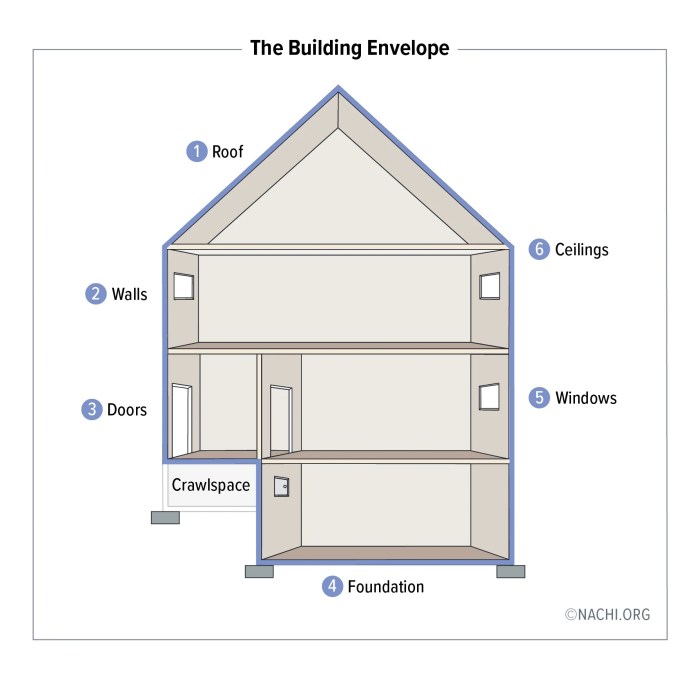
A building envelope is the physical separator between the interior and exterior environments of a building. It includes all components of the outer shell that enclose the living or working space, providing protection and support.
Components of a Building Envelope
- The roof: Protects against weather elements such as rain, snow, and sunlight.
- Exterior walls: Provide structural support and insulation to regulate temperature.
- Windows and doors: Allow light and ventilation while also acting as barriers to the outside environment.
- Foundation: Supports the entire structure and prevents moisture infiltration.
Functions of a Building Envelope
- Weather resistance: Shields the building from rain, wind, snow, and extreme temperatures.
- Thermal performance: Insulates the interior to maintain a comfortable temperature and reduce energy consumption.
- Air and moisture control: Prevents leaks and condensation that can lead to mold growth and structural damage.
- Noise reduction: Acts as a barrier to minimize sound transmission from outside sources.
Importance of Building Envelope
The building envelope plays a critical role in construction, serving as the barrier between the interior and exterior environments. It is essential for maintaining the structural integrity of a building and ensuring the comfort and safety of its occupants.
Impact on Energy Efficiency
A well-designed building envelope can significantly impact the energy efficiency of a structure. By effectively sealing off the interior from the outside elements, it reduces the need for heating and cooling systems to work harder, thus lowering energy consumption and costs.
- Proper insulation: Insulation within the building envelope helps regulate indoor temperature, reducing the reliance on heating and cooling systems.
- Airtight construction: Preventing air leakage through the building envelope improves energy efficiency by maintaining a consistent temperature inside the building.
- High-performance windows: Installing energy-efficient windows can enhance the building envelope’s ability to control heat gain and loss.
Challenges of Poorly Constructed Building Envelope
A poorly constructed building envelope can lead to a range of challenges that impact both the building’s performance and the comfort of its occupants.
- Moisture infiltration: Water leaks through gaps in the building envelope can cause mold growth, structural damage, and indoor air quality issues.
- Heat loss/gain: Inadequate insulation or air leakage can result in significant heat loss during winter and heat gain during summer, leading to discomfort and increased energy bills.
- Drafts and air leakage: Gaps or cracks in the building envelope can allow drafts to enter the building, creating uneven temperature distribution and discomfort for occupants.
Types of Building Envelopes
Building envelopes come in various types, each serving a specific purpose in the overall design and function of a structure. Understanding these different types is crucial in creating an efficient and sustainable building.
Opaque Building Envelopes
Opaque building envelopes are typically made of materials like concrete, brick, or wood. They provide insulation and protection against external elements, helping to maintain a comfortable indoor environment.
Transparent Building Envelopes
Transparent building envelopes, such as glass facades, allow natural light to enter the building while offering views of the surroundings. These envelopes contribute to energy savings by reducing the need for artificial lighting.
Composite Building Envelopes
Composite building envelopes combine both opaque and transparent elements to achieve specific aesthetic and functional goals. These envelopes often incorporate a mix of materials like glass, metal, and stone to create a unique architectural expression.
Comparison of Building Envelope Materials
When selecting materials for a building envelope, factors such as thermal performance, durability, and aesthetics must be considered. Glass offers transparency and light transmission but may lack insulation properties compared to concrete or metal. Concrete provides excellent thermal mass but may be heavy and costly to install.
Metals like aluminum offer durability and design flexibility but may require maintenance over time.
Considerations for Different Climates
The selection of building envelope type should also take into account the climate of the location. In hot climates, materials with high solar reflectance and low thermal conductivity are preferred to reduce heat gain. In cold climates, insulating materials with high R-values are essential to prevent heat loss.
Proper design and material selection can optimize energy efficiency and occupant comfort in any climate.
Designing a Building Envelope
When it comes to designing a building envelope, there are several key steps to ensure its sustainability and effectiveness. Architects, engineers, and builders play crucial roles in this process, working together to create a structure that meets the specific needs of the building and its occupants.
Building orientation and insulation choices are also important factors that impact the design of the building envelope.
Role of Architects, Engineers, and Builders
Architects are responsible for creating the overall design and layout of the building, including the shape and size of the envelope. Engineers work to ensure the structural integrity of the envelope, considering factors like wind loads and thermal performance. Builders bring the design to life, constructing the envelope with precision and attention to detail.
Building Orientation and Insulation Choices
The orientation of the building plays a significant role in the design of the envelope. By strategically placing windows and walls, architects can maximize natural light and ventilation, reducing the need for artificial heating and cooling. Insulation choices also impact the envelope design, helping to regulate internal temperatures and reduce energy consumption.
Last Point
As we conclude our journey into the realm of building envelopes, it becomes clear that these structures are not just outer layers but integral components of sustainable and energy-efficient buildings. The significance of a well-designed building envelope cannot be overstated, making it a cornerstone of modern construction practices.
Expert Answers
What are the components of a building envelope?
A building envelope typically consists of walls, roof, foundation, windows, and doors.
How does building orientation impact envelope design?
The orientation of a building affects factors like solar heat gain, natural lighting, and overall energy efficiency, influencing envelope design choices.
What types of materials are commonly used in building envelopes?
Materials such as glass, concrete, metal, and various composites are commonly used in constructing building envelopes.